“I think they (the Vietnamese) were proud people, but to say or hold anything against them, they were just people who was trying to survive. That’s the way I look at it.”
Long
Home
Like most citizens asked to go to war, the typical Vietnam War veteran was perhaps 19 or 22 when placed in combat, instructed to fight what later proved a poorly conceived unwinnable war. In time, the Vietnam War would divide an already fractured America, complicating the post-war transition for many of these soldiers. For some, the war experience proved the most poignant time in their once young lives; while for others, time overseas proved a brief, nearly forgotten chapter. Mitch wanted to understand the essence of these disparate individual journeys looked at more than a half century home - what each remembered or buried deep, how they coped with PTSD and the ravages of Agent Orange, how their perspective, and remembrance, was shaped and re-shaped by time. After sitting in living rooms, kitchens, on porches and barstools, taking in complex and conflicted personal stories - frequently told with more reluctance than bravado - Mitch gained new insight into war, and a deeper empathy for those asked to do the fighting.
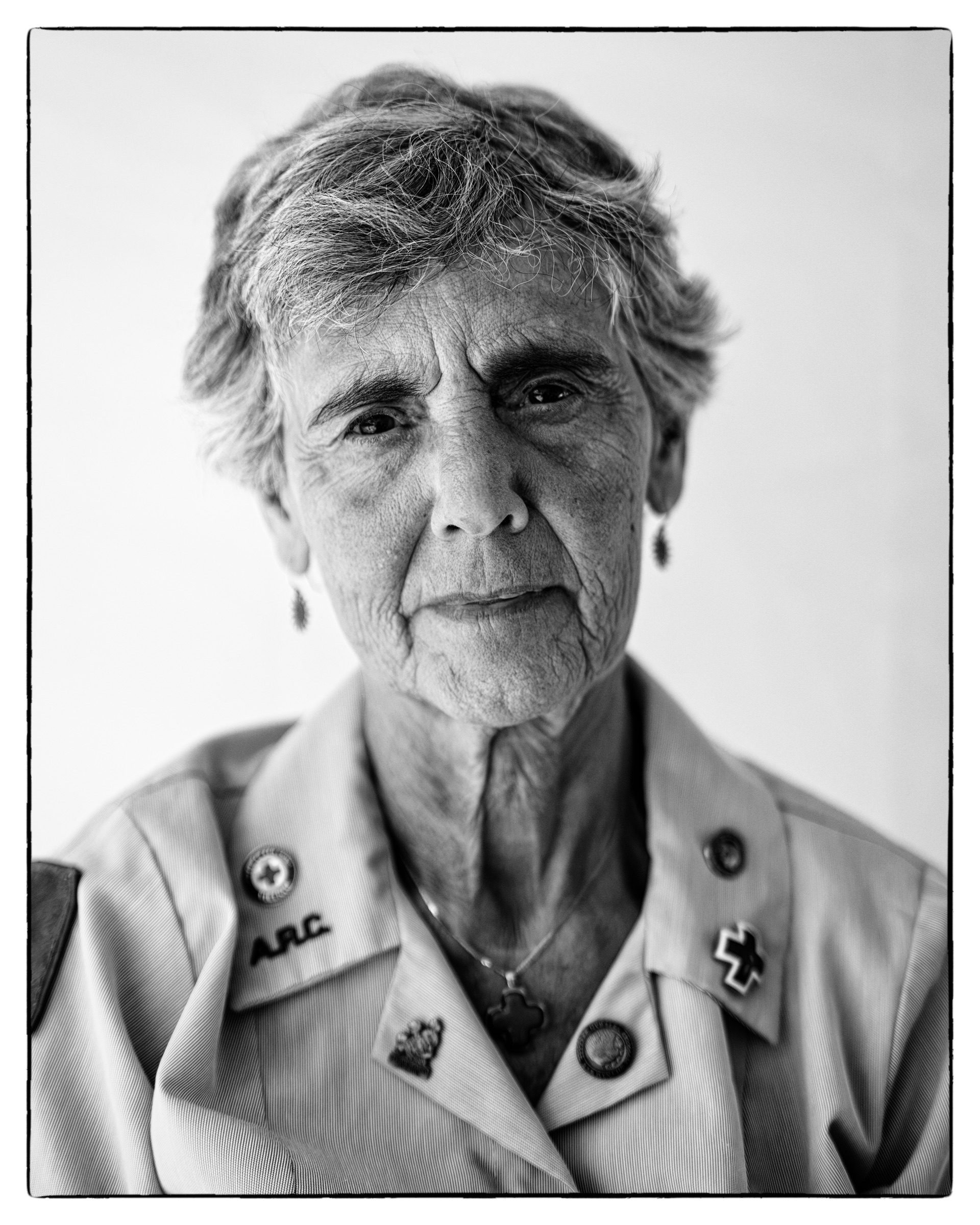
Accompanying the poignant words selected from conversations held across the United States are Mitch’s portraits, revealing the rawness and vulnerability of the moment, often reflecting defiance, and a certain pridefulness. Each portrait was taken handheld, without secondary lighting sources or props, presented in black and white.
“You know, it’s like when I lost my arm and I was in the hospital and bandaged up. I remember, like, crying for two days. I cried for two days. Two days. It’s terrible. Then I kind of woke up the third day and I just said, You know, it’s not growing back. You’re just gonna have to make the best of it. So that means you make the best of everything.”
“... and so the next day we find out that there were nine Vietcong trying to get over the perimeter fence, and they were all shot and killed. And they left them hanging on the fence. That was my introduction to Vietnam. It scared the daylights out of me.”
“Here we are, young women in these blue dresses that are like iron. I mean, they wear amazingly well. And I don’t know, we were so young and so naive. It was like, well, why would anybody shoot a young girl in a blue dress? … now I realize that sounds idiotic today, but I don’t think it ever crossed my mind.”
“I still got a bitter taste about stuff . . . everywhere people say, well, “Thank you for your service.” Where the hell were you at when I came home?”
“I was angry at everybody. I couldn’t get along with people when I got back to the world as we called it. And I met up with my old friends, high school friends, and they’d come and say “hey, come on, let’s go out”. And just, just their disposition and their attitude was so flippant. I would just argue with ’em and I wasn’t fun to be around with, you know. They were like, you’re not the same anymore. They wouldn’t come around anymore cuz I just wasn’t a pleasant person in their eyes. But in my eyes I was like, no, you guys are the ones that are screwed up.”
“We tried to say, well, our buddy’s killed, so I’m gonna revenge him. But if you’re taught, if you believe in God, that’s not your position. So how do you vindicate yourself for doing that? You were trained to do it. You were trained to kill people, and then you have to live with that the rest of your life.”
“I don’t know about other combat vets, but I just became like a machine. I had no feelings. I never shed a tear in Vietnam. Once you see Saving Private Ryan and Tom Hanks—he’s a captain and he loses some of his men and he breaks down one day and he goes and gets out of sight where nobody’s looking and he starts shaking real hard and he starts crying and he blows it off and he gets himself together again and regains the composure and he keeps on going—I never had an incident like that.”